
 By
By The Interest Rate Gap Is Larger Than Most People Realize
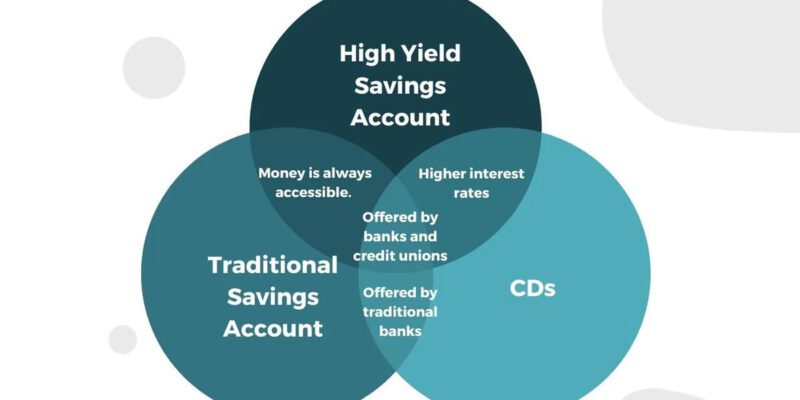
Let me start with a number that might genuinely surprise you. The average traditional savings account at a major bank has historically paid an interest rate that makes your money barely grow at all. Meanwhile, high-yield savings accounts from online banks have consistently paid significantly more.
That gap represents real money. On $10,000 saved, the difference between a traditional savings account rate and a high-yield savings account can add up to hundreds of dollars per year. Over five years, compounding, it becomes a meaningful amount of money you’re leaving behind for no good reason other than inertia.
The only reason most people keep money in low-yield accounts is that it’s where it already is. That’s not a financial strategy, it’s financial default. And switching is genuinely not complicated.
How High-Yield Savings Accounts Work
High-yield savings accounts work exactly like regular savings accounts, with one primary difference: they pay substantially more interest. They’re typically offered by online banks that have lower overhead costs than traditional brick-and-mortar banks (no physical branches to maintain), and they pass some of those savings on to customers in the form of better interest rates.
Your money is still FDIC insured up to $250,000, exactly the same protection as a traditional bank. You can still transfer money in and out, though transfers typically take one to three business days rather than being instantaneous. Most have no monthly fees and no minimum balance requirements.
The main practical difference is the lack of physical branches. If you need to deposit cash, you’ll need to find a workaround (some online banks are affiliated with ATM networks or allow cash deposits at partner locations). For most people, this is not a real obstacle since most transactions are digital anyway.
The Case for Traditional Banks
I want to give traditional banks a fair hearing because they do have genuine advantages that matter for some people.
Convenience and integration. If all your accounts (checking, savings, mortgage, credit cards) are at the same bank, managing money is simpler. Everything is visible in one app. Transfers are usually instant. Customer service can see your full relationship.
Physical branches. If you regularly deposit cash or deal with complex banking needs that require in-person help, physical branches have real value. Online banks handle these situations poorly or not at all.
Established relationships. If you need a loan or mortgage in the future, having a history with a bank can sometimes be advantageous, though this matters less than it used to.
For everyday people without complex banking needs, these advantages are mostly hypothetical. Most people don’t deposit cash regularly, don’t need in-person banking help often, and rarely leverage their banking relationship for loan purposes. But for small business owners, people who regularly deal with cash, or those who genuinely want one-stop banking, traditional banks serve a real purpose.
Which Banks Are Worth Considering
For high-yield savings, the consistently well-regarded options include Ally Bank, which has excellent customer service and a clean app along with competitive rates. Marcus by Goldman Sachs is another solid option with a simple interface focused purely on savings. SoFi offers solid rates and some additional features if you want banking beyond just savings. Discover also offers competitive savings rates alongside its credit card business.
Credit unions deserve a mention here too. Many credit unions offer high-yield savings options with the added benefit of nonprofit cooperative structure, meaning they’re genuinely working in members’ interests rather than shareholders’ interests. If you’re part of a community with a good credit union, check their savings rates.
Rates change frequently, so comparing current rates across these institutions before opening an account is important. Sites that track high-yield savings rates are updated regularly.
The Practical Switch: How to Actually Do It
Opening a high-yield savings account takes about fifteen minutes online. You’ll need your personal information, your current bank account details for the initial transfer, and identification information.
My recommendation for most people: don’t close your traditional bank account. Keep it for day-to-day checking and use the high-yield savings account purely for savings. This gives you the convenience of a local or established bank for everyday banking while capturing better returns on your savings.
Set up an automatic transfer from checking to high-yield savings right away. Even a modest amount automatically transferred on payday means your savings grow without requiring ongoing willpower.
One practical consideration: when you need your emergency fund, transfers from online banks take one to three business days. Keep a small buffer in your regular checking account for genuine emergencies that need same-day access. Most “emergencies” actually have a day or two of lead time, but for genuine same-day needs, your checking account or credit card (to be immediately repaid) is more accessible.
The Verdict
For most people, the answer is both. Use a traditional bank for checking and day-to-day banking. Use a high-yield savings account for any money you’re not spending in the next thirty days.
The interest rate difference on savings is not going to make you rich. But capturing higher returns on money you’re already saving, with essentially no downside and fifteen minutes of setup effort, is one of the most straightforward financial improvements available to most people. There’s really no good reason to leave that money on the table.