 By
By The Gas Bill Nobody Talks About Seriously
Most people treat their gas bill the same way they treat the weather — something that happens to them rather than something they can influence. You pull up to the pump, wince at the price, and pay it. Then you do it again next week.
But the average American spends somewhere between $2,000 and $3,500 per year on gasoline depending on how much they drive and what they drive. That’s a significant expense with more levers than most people realize. I’m not talking about buying a hybrid or moving closer to work — those are real options but they’re big decisions. I’m talking about what you can do this week, with the car you already have, living where you already live.
The strategies that move the needle are simpler than most people think, and a lot of them require nothing more than changing a few habits around when and where you buy fuel.
The App Arbitrage: Finding Cheap Gas Near You
GasBuddy and similar apps have become genuinely useful tools for fuel savings. Prices at gas stations within a few miles of each other can vary by 15 to 30 cents per gallon in many markets — and on a 15-gallon tank, that’s $2.25 to $4.50 per fill-up. Not life-changing on its own, but over 50 fill-ups per year, it’s $112 to $225 in savings for the 60 seconds it takes to check an app.
The pattern I’ve noticed in my own area: warehouse clubs (Costco, Sam’s Club) consistently price gas 15 to 25 cents below nearby stations. If you pass one on your regular routes, the membership fee often pays for itself in fuel savings alone, even before you count the grocery and merchandise savings.
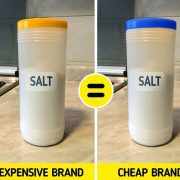
House-brand gas stations (not the major branded stations like Shell or BP) often run cheaper without any meaningful quality difference. The federal fuel standard is the same regardless of the brand on the sign. The additives major brands add are real but their impact on most modern engines is minimal.
Driving Habits That Cut Fuel Use Immediately
Aggressive driving — rapid acceleration and hard braking — reduces fuel efficiency by 15 to 40 percent on highways according to Department of Energy data. That’s not a rounding error. That’s the difference between 30 mpg and 20 mpg on the same car.
The specific culprits: jackrabbit starts from traffic lights, speeding up to a red light and then braking, highway speeds above 65 mph (fuel efficiency drops sharply above this threshold), and leaving the engine running while parked or waiting.
Smooth, anticipatory driving — coasting toward red lights rather than braking at them, maintaining steady highway speeds, accelerating gradually — can realistically improve your fuel economy by 10 to 20 percent with no mechanical changes. For someone spending $200 per month on gas, that’s $20 to $40 back per month without any sacrifice beyond patience.
Tire Pressure: The Free Efficiency Fix Everyone Ignores
Underinflated tires are one of the most common and most ignored fuel efficiency problems. The Department of Energy estimates that for every 1 PSI drop in average tire pressure, fuel economy decreases by about 0.2 percent. Most people’s tires are running 4 to 8 PSI below recommended pressure — that’s up to 1.6 percent lower fuel economy from tire pressure alone.
The fix takes five minutes and costs nothing at most gas stations (many still offer free air). Check your tire pressure monthly (morning before driving for an accurate reading) against the recommended PSI listed in your car door jamb — not the maximum PSI on the tire sidewall.
While you’re at it, keeping your air filter clean maintains engine efficiency. A clogged air filter can reduce fuel economy meaningfully and costs $15 to $30 to replace — a straightforward DIY job for most cars.
Gas Rewards Programs Worth Actually Using
Grocery store gas rewards programs have improved significantly. Kroger, Safeway, and similar chains now offer meaningful discounts (often 10 to 25 cents per gallon) for purchases made at their stores or fuel partner stations. The key is making these programs work for purchases you’d already be making — not spending more to earn rewards.
Some credit cards offer 3 to 5 percent cash back at gas stations specifically. On $2,400 per year in fuel spending, a 3 percent card returns $72 annually. Not transformative, but real money for a card you’d use anyway.
The combination approach — warehouse club pricing, grocery rewards, a gas-optimized credit card — can realistically save $300 to $600 annually for a two-car household without any significant change in behavior.
The Bigger Picture: Trip Consolidation
The highest-leverage fuel strategy is one nobody talks about in gas-saving articles: trip consolidation. Cold engine starts use significantly more fuel per mile than warm-engine driving. Each short trip from a cold start is disproportionately expensive in fuel consumption.
Batching errands — one longer trip instead of three short ones — reduces total cold starts and total miles driven. Planning routes efficiently (right turns over left turns in the US, avoiding backtracking) reduces total miles. These behavioral changes reduce fuel consumption more than any other strategy besides the car purchase itself.
For households where one person works from home part-time, working from home even two additional days per week eliminates roughly 500 miles of commuting per month for the average commuter. At 25 mpg and $3.50 per gallon, that’s $70 per month — $840 per year — for simply reorganizing when you work, not how you work.