 By
By The Carrier Pricing Game
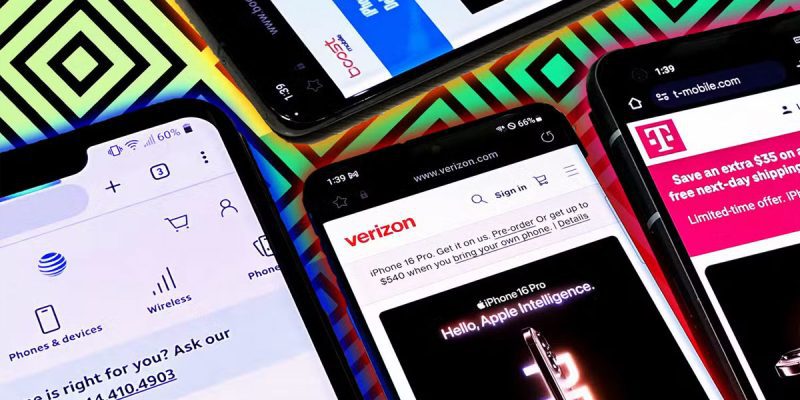
The major carriers (Verizon, AT&T, T-Mobile in the US) charge premium prices that are propped up by aggressive marketing, locked-device practices, and the inertia of customers who don’t comparison shop.
The same towers, literally the same physical infrastructure, is used by smaller carriers called MVNOs (Mobile Virtual Network Operators) who buy capacity wholesale and resell it at lower prices. Mint Mobile, Visible, Cricket, Boost, Google Fi, Consumer Cellular, and many others use major carrier networks and sell service at dramatically lower prices.
A single line of unlimited service from a major carrier runs $65 to $85 per month. The same coverage on an MVNO typically runs $20 to $45 per month. For a family of four, the difference is $80 to $200 per month, or $960 to $2,400 per year.
Will Coverage Actually Be the Same?
This is the right question to ask before switching. Coverage is nearly identical for most people in most places. When you’re on Mint Mobile’s T-Mobile network, you’re literally on T-Mobile towers. The signal is the same.
The caveat: major carriers deprioritize MVNO traffic during congestion. In very crowded areas at peak times, you might notice slightly slower data speeds. In practice, most people in most situations don’t notice any difference.
Check the coverage map for the specific network your MVNO uses, not the MVNO’s own map (which is often just the parent network’s map anyway). Make sure the network covers the places you actually go, including any rural areas or frequent travel destinations.
How to Actually Switch
Switching carriers is significantly easier than it used to be. The main steps: check that your current phone is unlocked (most phones bought outright are; phones on installment plans may not be unlocked until paid off), port your existing number to the new carrier, and activate the new SIM.
Most people can do this in under an hour. The new carrier handles most of it and your number comes with you. You don’t lose your contacts, your apps, or any of your phone settings.
If your phone is on a payment plan with your current carrier, pay it off first or you’ll owe an early termination fee. Some MVNOs will pay the fee or offer credits to offset it when you switch.
The Plans That Make Sense for Different Users
Not everyone needs the same plan. Here’s a rough guide.
Light users who primarily use WiFi and don’t stream much data: a plan with 5 to 10 GB of data is often enough and costs $15 to $25 per month from a good MVNO.
Moderate users who stream some video and use navigation: an unlimited plan from an MVNO in the $30 to $45 range covers most people’s actual usage.
Heavy users or frequent travelers who stream constantly: a major carrier’s unlimited plan might make sense, though even here, the most competitive MVNO unlimited plans have caught up considerably.
Families: multi-line discounts on MVNO plans are often dramatic. Four lines through some MVNOs run $100 to $140 total, compared to $200 to $300+ on major carriers for the same four lines.
The Device Cost That Often Gets Ignored
The phone itself is a separate cost from the plan, and many people upgrade too often. If your phone works fine, a new phone doesn’t improve your life in proportion to its cost.
Major carrier trade-in deals are designed to lock you into their ecosystem and often require multi-year plan commitments that recapture the ‘free phone’ value many times over in plan pricing. The math rarely favors the customer.
Buying a mid-range Android or a one-generation-old iPhone, unlocked, outright, gives you a phone that meets 95 percent of most people’s needs at 40 to 60 percent of flagship phone prices and the freedom to switch carriers any time the plan pricing improves.