
 By
By Why $10,000 Is the Target Worth Building Toward
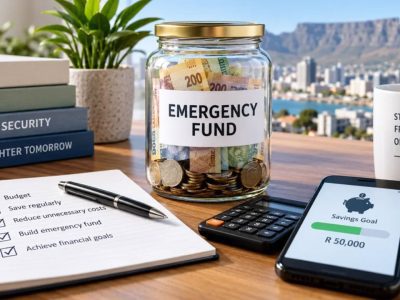
A $1,000 emergency fund is a starting point. A three-month emergency fund is the conventional goal. But for most households, $10,000 is the number that actually provides something approaching genuine financial security.
Ten thousand dollars covers: a major car repair plus the next unexpected expense. A month of unemployment plus medical bills. A home repair that wasn’t in the insurance claim. The kind of multi-event financial turbulence that real life occasionally produces rather than one clean, isolated emergency.
For many households, $10,000 represents three to five months of essential expenses — right in the middle of the conventional recommendation and in a range that genuinely changes how you experience financial risk. With $10,000 available, a job loss is a serious problem but not an immediate crisis. Without it, the same event can become a financial disaster within weeks.
The Monthly Math: $417 Is All You Need
Ten thousand dollars in 24 months requires $417 per month in savings. That’s the arithmetic. The question is whether $417 per month is achievable for your household.
For households where $417 is genuinely out of reach without significant changes, the timeline extends rather than the goal changing. Thirty-six months at $278 per month gets to the same destination. Forty-eight months at $208 per month still gets there. The target matters; the timeline is flexible.
The more useful framing than the monthly number: what combination of spending reductions and income additions makes $417 per month available? This might be $300 per month from spending reductions and $117 from occasional extra income. Or $200 from spending and $217 from a specific side activity. The exact combination depends on your starting situation.
Finding the $417 in Your Current Budget
For most households spending $3,000 to $5,000 per month, finding $417 in waste or non-essential spending is achievable without meaningful sacrifice. The spending categories to audit:
Subscriptions: most households find $50 to $150 per month in subscriptions they’d barely notice cancelling. Food delivery and takeout frequency reduction: cutting delivery from four times per week to once or twice saves $100 to $200 per month for average households. Grocery optimization: store brands, meal planning, and waste reduction save $75 to $150 per month. Phone and internet service: switching or negotiating typically saves $30 to $80 per month. One streaming service or gym you rarely use: $10 to $50 per month.
These categories alone typically produce $265 to $630 in findable monthly savings for households that haven’t recently optimized them — enough to fund the emergency fund savings and potentially more.
Accelerating the Timeline With Income Additions
Every extra dollar beyond your monthly target compresses the timeline. Specific income additions that many households can access without major disruption:
Selling unused items: a one-time effort that produces $200 to $1,000 depending on what you have. Applied directly to the emergency fund at the start, this reduces the monthly savings required meaningfully.
Annual tax refunds directed to the emergency fund: the average US tax refund is approximately $2,800. Two consecutive years of directing the refund to the emergency fund provides $5,600 of the $10,000 goal, with regular monthly savings covering the remainder.
A specific time-limited side activity: six to eight months of consistent weekend work, tutoring, freelance projects, or delivery driving can add $3,000 to $6,000 to the fund while normal savings continue.
The Account Setup That Makes It Work
The $10,000 emergency fund needs to be in a specific, dedicated account that isn’t used for anything else and isn’t easily accessible for impulse decisions.
A high-yield savings account at a bank separate from your primary bank is the right structure. The separation creates a small but meaningful friction between the emergency fund and your spending — a 24 to 48 hour transfer delay that’s enough to make you reconsider whether something is really an emergency.
Name the account explicitly: ‘Emergency Fund — DO NOT TOUCH.’ Many banks allow custom account names. This naming convention is a small psychological tool that changes how you relate to the account.
Automate the monthly contribution. The day after every paycheck, an automatic transfer of your target amount goes to this account. Not a manual transfer you make if you remember and feel like it — an automatic transfer that happens regardless of how busy or stressed or distracted you are.