 By
By The Convenience Premium We Pay Without Thinking
There’s a category of spending that personal finance books rarely name as a category: convenience spending. It’s not dining out as a treat. It’s not a luxury purchase you thought about and decided was worth it. It’s the endless small payments for making your life slightly easier in moments when you’re tired, rushed, or just can’t be bothered.
Delivery fees and service charges on food orders. Premium grocery store prices because it’s closer than the cheaper store. Valet parking because you didn’t want to look for a spot. Single-serve coffee pods instead of ground coffee. Pre-washed and pre-cut vegetables at triple the price. The gym with the convenient location instead of the cheaper one slightly further away. Single-item overnight shipping because you forgot to plan ahead. Dry cleaning items you could wash at home.
Individually, each of these feels trivially small. Collectively, they’re quietly bankrupting people who otherwise think they’re being reasonably careful with money.
I had a client — I’m not a financial advisor, but I helped a friend do a budget audit once — who was genuinely confused about where her money went each month. She wasn’t buying designer clothes. She wasn’t taking expensive vacations. She was just living a busy urban life. When we added up her convenience spending, it was over $700 per month. That’s $8,400 a year for slightly less friction in her daily life.
Food Delivery: The Most Expensive Convenience
Let’s start with the one that’s doing the most damage for the most people right now: food delivery apps.
A meal that would cost you $12 at the restaurant or $6 to cook at home costs $20-28 when you add delivery fee, service fee, tip, and surge pricing. That’s not a 20% premium. That’s a 100-400% premium depending on your comparison point.
Nobody orders delivery once a week. The default behavior for people who use delivery apps is several times per week, often more during busy periods. At three orders per week at an average premium of $10 over the restaurant price, that’s $30 per week or $1,560 per year in pure convenience premium. Compared to cooking at home, the premium is even higher.
I’m not saying never order delivery. I’m saying be honest about how often you do it and what you’re actually paying for. Sometimes it genuinely makes sense: you’re exhausted, there’s nothing at home, and the alternative is making bad decisions. But for many people, delivery has become the default for situations that don’t actually require it. Boredom, mild laziness, not wanting to cook when you actually have food and energy.
Cutting delivery from five times a week to once a week doesn’t feel like a dramatic lifestyle change. The math on it is significant.
Time vs Money: The Calculation We Almost Always Get Wrong
The defense of convenience spending always comes down to time. “My time is worth more than the cost.” “I’d rather pay $8 for delivery than spend 45 minutes cooking.”
This argument is often wrong for two reasons. First, the time comparison isn’t 45 minutes cooking versus 30 minutes waiting for delivery. It’s 45 minutes cooking versus 5 minutes ordering plus 30 minutes waiting. The actual time difference is frequently small.
Second, and more importantly, you don’t get paid for the time you save unless you’re using it productively. If you order delivery instead of cooking and spend the saved 30 minutes scrolling social media, you haven’t traded time for money. You’ve traded money for the option to scroll social media, which isn’t worth $12 extra.
The honest version of the time-versus-money argument applies when you use the saved time for something genuinely valuable: paid work, meaningful time with family, professional development. In those cases, yes, the convenience premium can absolutely be worth it. The problem is most people apply the logic reflexively to any convenience spending regardless of what they actually do with the saved time.
The Subscription Creep of Convenience Services
Beyond food delivery, the convenience economy has produced a remarkable array of subscription services that automate different frictions from daily life.
Grocery delivery subscriptions. Laundry pickup and delivery services. Cleaning services. Lawn care apps. Task-rabbit style errand runners. Car washing subscriptions. These are all genuine services that solve real problems, and for some people in some life situations, they’re genuinely worth the cost.
What happens in practice is that people subscribe when a circumstance makes them particularly valuable (new baby, job transition, health issue) and then the subscriptions continue indefinitely long after the acute need has passed. They’re on autopay, they process quietly, and they become invisible costs.
Do an annual audit of every service you pay someone else to do that you could reasonably do yourself. Not because you should do everything yourself — sometimes outsourcing is correct — but to make the choice consciously. At current rates, you’re definitely paying for it whether you need it or not.
Strategic Convenience: When It’s Worth Paying For
I want to be fair here because the point is not to eliminate all convenience spending. It’s to make it intentional.
Some convenience spending is genuinely high-value. A cleaning service that preserves a relationship’s peace, lets you spend weekend hours with your kids, and doesn’t create ongoing resentment might be worth every dollar to a two-income family with young children. A grocery delivery service that prevents you from buying junk food at a physical store might save you more than it costs between the impulse purchase reduction and health outcomes.
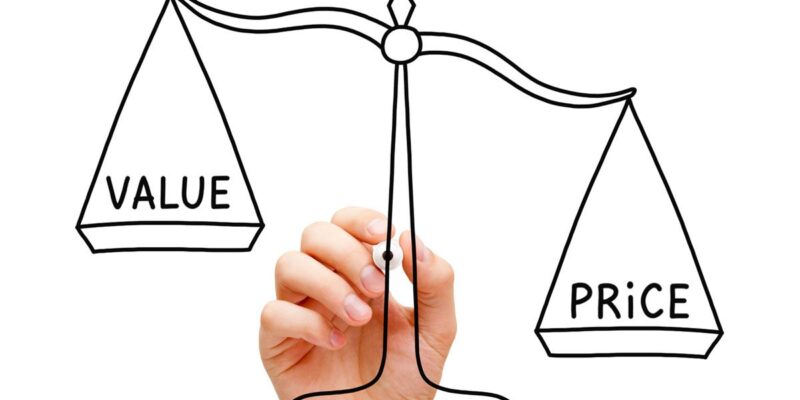
The question is always value delivered for cost. When a convenience service genuinely improves your life in proportion to what it costs, it’s worth it. When it’s just habit, inertia, or theoretical efficiency that doesn’t manifest in your actual life, cut it.
Practical test: for any recurring convenience service, ask yourself what specifically would be worse in your life if you cancelled it. If you can’t give a concrete answer, cancel it for two months. If you don’t miss it, you’ve found a saving. If you do miss it specifically and meaningfully, that tells you it was delivering real value.
The Batch and Plan Alternative
Most convenience spending exists to solve problems created by poor planning. Food delivery is a symptom of not having planned meals. Last-minute shipping is a symptom of not having anticipated needs. Premium-priced nearby stores are a symptom of not having stocked up when you had time.
Batch planning and batch execution is the frugal alternative to constant convenience spending. Two hours on a Sunday cooking meals for the week eliminates most delivery temptation during busy weekdays. A monthly larger grocery shop with a solid list eliminates most emergency small shop trips at higher prices. Planning ahead for gifts, occasions, and needs means not paying for rushed or premium shipping.
This requires treating your time differently: investing bigger blocks of time in advance to save smaller amounts of money across many moments. Many people resist this because they don’t want to be tied to a plan. But the alternative is being tied to constant convenience spending, and that costs both more money and, ironically, more mental bandwidth. Dealing with “what am I going to eat” or “where am I going to park” or “how do I get this done in time” six times a day is its own form of exhausting friction.