 By
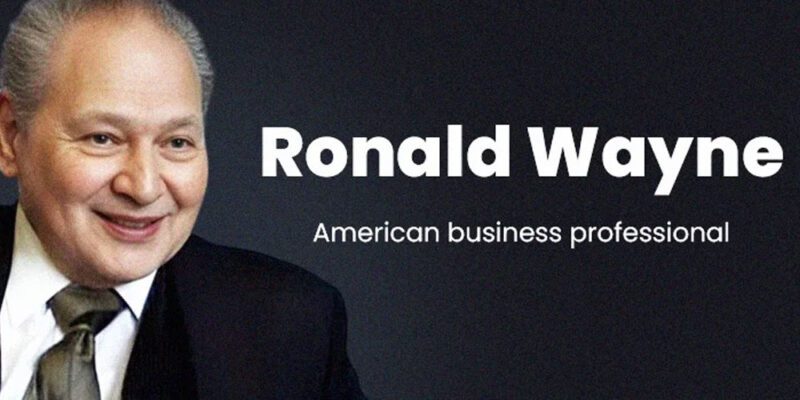
By Steve Jobs and Steve Wozniak are the names most closely associated with Apple, one of the most valuable firms in history. However, 50 years ago, when they signed the papers officially establishing the corporation, a third, lesser-known signature appeared: Ronald G. Wayne.
Wayne was working as an engineer at Atari when Jobs asked him to assist persuade Wozniak to start his own computer company. Wayne—who later regarded himself as the “adult in the room”—drafted Apple’s original partnership agreement and received a 10% ownership, while Jobs and Wozniak each received 45%.
He walked away after only 12 days.
Concerned about the financial risk of the partnership, Wayne sold his portion for $800 and later received an additional $1,500 to formally waive any future claim to the company. Today, with Apple’s market capitalisation at $4 trillion, that 10% stake may be worth more than $400 billion.
Wayne went on to spend decades working as an engineer and living a pretty tranquil life—far from Silicon Valley—before settling in Nevada, where he relies mainly on Social Security and occasionally sells rare stamps and coins.
But Wayne, now 91, says he sees the decision through the lens of clarity rather than regret.
“My success has never been defined by money,” Wayne told Fortune via email. “It has been characterised as acting with clarity, honesty, and sound judgement based on what I knew at the time. My perspective has shifted significantly over the last year as I’ve realised how much the public narrative has deviated from the realities.
In retrospect, selling his stake seems like a costly error. However, in 1976, Apple was far from a sure bet. Jobs had taken out a $15,000 loan to fulfil the company’s first order from a Bay Area computer retailer, which Wayne knew had a bad reputation for paying debts. Unlike his younger cofounders, Wayne already had a home, a car, and personal belongings that he feared might be taken if the company collapsed.
Apple’s third cofounder offers advise to young entrepreneurs.
For a growing number of young people, entrepreneurship is becoming an increasingly appealing option. According to ZipRecruiter’s most recent Graduate Report, nearly 38% of graduates from the classes of 2025 and 2026 are considering starting their own businesses, a trend that coincides with a significant tightening of the entry-level labour market.
However, Wayne warns the aspiring entrepreneur: if anything sounds too good to be true, it generally is. “Understand exactly what you are agreeing to, particularly in a general partnership, where liability is not limited to your ownership percentage,” Wayne replied. “Each partner can be held responsible for the full amount of any obligation.”
While the upside in business is boundless, so is the downside, Wayne added.
“Know your risk in practice, not just on paper. “Seek counsel,” Wayne advised Fortune. “And never assume your exposure ends at your percentage, because it doesn’t.”
Wayne, meanwhile, has not totally escaped Apple’s lengthy shadow. In fact, he’s embraced the irony of his situation. Earlier this month, he collaborated with Anheuser-Busch to market a new kind of apple: the reintroduction of Busch Light Apple, a limited-edition beer that has generated another viral rush among fans looking to stock up.
“Let me show you where a man’s wealth really lies,” Wayne quipped in a promotional film, pointing to a beer-filled garage. “Yep, still a really good investment.”