 By
By Why Earning More Doesn’t Always Mean Having More
Lifestyle creep — the tendency for spending to expand to consume available income regardless of income level — is one of the most universal and least discussed financial phenomena. It explains how someone can move from earning $40,000 to earning $90,000 over a decade and end up feeling no more financially secure than when they started.
The mechanism is simple. You get a raise. The raise feels like extra money. You upgrade something — the apartment, the car, the restaurants you frequent, the vacations you take. The upgrade feels deserved and reasonable. It absorbs the raise. Next year you get another raise and the cycle repeats. A decade later your lifestyle is far more expensive than it was and your savings rate is roughly the same percentage of a much higher income.
I’ve watched this happen to intelligent, financially aware people — people who knew it was a trap and still fell into it. The psychological forces driving lifestyle creep are stronger than the intellectual awareness of it. Behavioral systems, not just awareness, are what actually prevent it.
The Automatic Savings Rate Increase System
The most reliable behavioral system for preventing lifestyle creep when income increases is automating the commitment to save before you make any lifestyle changes.
A simple rule: when you receive any income increase — raise, bonus, new job — immediately increase your automatic savings or investment transfer by at least half the after-tax increase. Not eventually. That day or the next payday. Before you adjust to the higher take-home and start spending it.
A $5,000 gross annual raise is approximately $300 per month after taxes (depending on your tax bracket). Immediately directing $150 to $200 per month of that to additional retirement or investment contributions and allowing the remaining $100 to $150 to improve your lifestyle means the raise simultaneously builds wealth and improves your life — without the full raise being absorbed into spending.
Identifying Lifestyle Creep in Your Own History
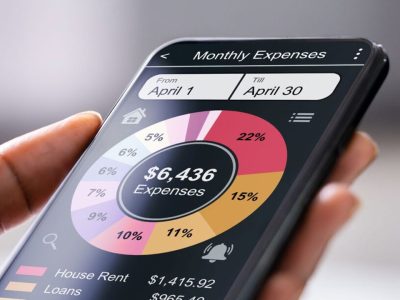
Before you can address lifestyle creep, it helps to see it clearly in your own spending history. The exercise: look at what you spent on five or six categories five years ago versus today. Housing, dining, transportation, clothing, entertainment, subscriptions. Account for any legitimate life stage changes (a child, a longer commute, a legitimate new need).
For most people who’ve experienced meaningful income growth over five years, the exercise reveals spending increases in multiple categories that exceed what could be explained by price inflation or genuine life change. That gap is lifestyle creep — consumption growth that consumed income growth without producing proportional increases in wellbeing.
This isn’t meant to produce guilt. It’s meant to produce clarity about where the money has actually gone, because you can’t make deliberate choices about future income allocation without understanding where past income went.
The Upgrade Decision Framework
Not all lifestyle upgrades are lifestyle creep. The person who moves from a dangerous neighborhood to a safe one after a salary increase made a real quality-of-life improvement that was genuinely worth the cost. The person who buys better running shoes because they now run seriously made a functionally justified upgrade.
A framework for evaluating lifestyle upgrades when income increases:
Will this genuinely improve my quality of life in ways I’ll notice and value a year from now? Or does it feel good now but become invisible background quickly?
Can I afford this without reducing my savings rate? Or does it require absorbing income growth that should be going to savings?
Is this the upgrade I actually want, or is it something I think I should want at this income level?
Upgrades that pass the first and second questions and fail the third are the most common form of lifestyle creep — spending driven by social expectation of what someone at your income level should have, not by genuine personal desire.
The Savings Rate as North Star
The most reliable guard against lifestyle creep is a commitment to a savings rate, not a savings amount. A fixed percentage of income saved means that income growth automatically translates to both higher absolute saving and permitted lifestyle growth.
If you commit to saving 20 percent of gross income at every income level, a $10,000 annual raise means $2,000 more in annual savings and $8,000 more available for lifestyle. No guilt, no moral judgment, automatic wealth building alongside lifestyle improvement.
The savings rate commitment requires revisiting annually: are you actually hitting the target? Has something changed in your situation that makes adjustment appropriate? This annual review keeps the commitment real rather than allowing it to drift as spending rises.